
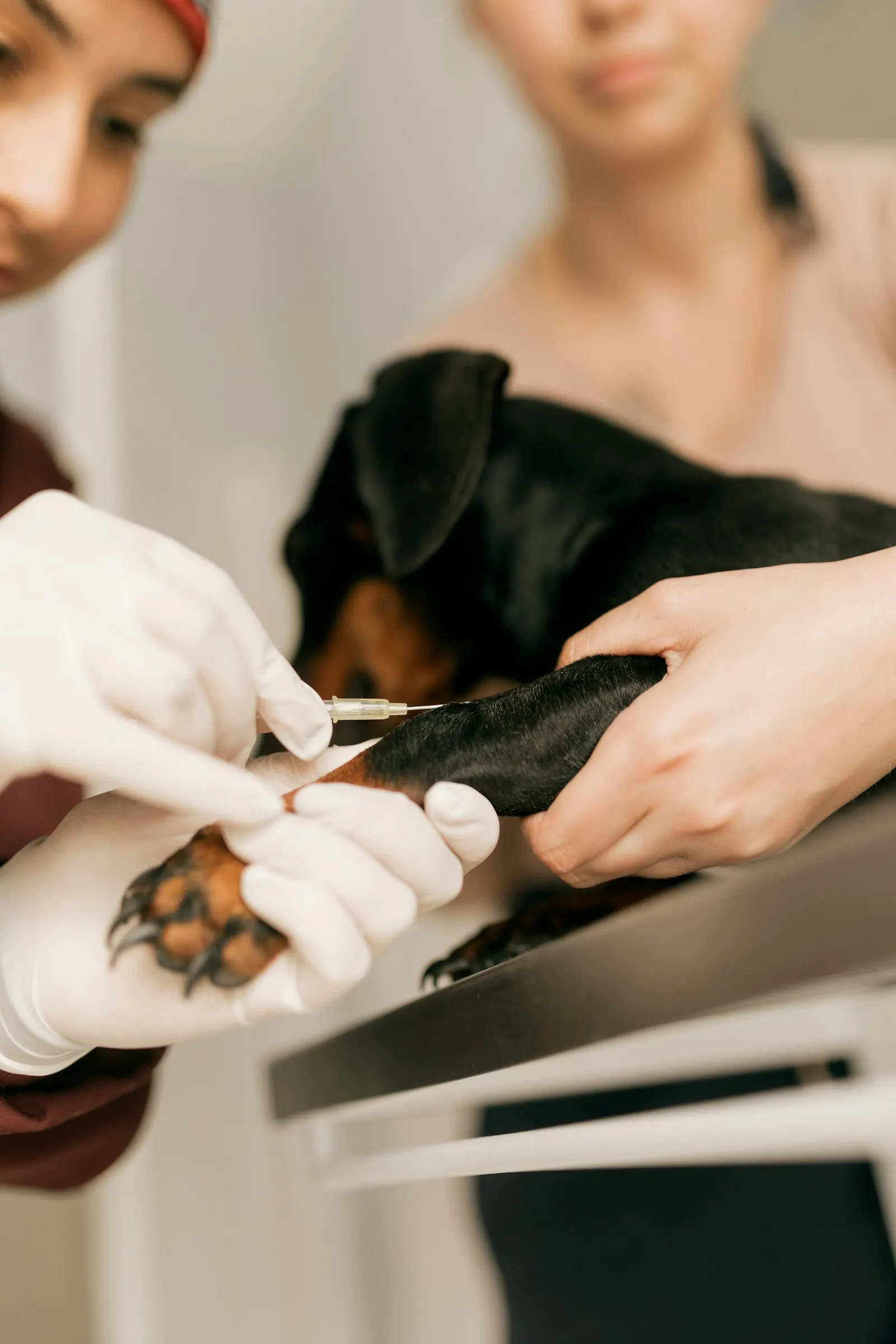
Vaccines are the most powerful protective tool veterinary medicine has. Nearly all of the diseases that are hard or impossible to treat, among them distemper, parvoviral enteritis and rabies, can be prevented with regular vaccination.
How does the vaccination schedule work?
Puppies and kittens usually receive their first vaccines at six to eight weeks of age, with repeat doses a few weeks apart to build core immunity. In adults, protection is kept up with yearly boosters. For dogs, the combination, rabies and kennel cough vaccines are the ones we give most often. For cats, it is the combination, rabies and feline leukemia vaccines.
No two schedules are quite alike, and lifestyle is the deciding factor. A dog that plays with others in the park, boards at a kennel or travels does not carry the same risks as a cat that never goes outside. We ask about all of this at the first exam and put together the right schedule for your pet with you.
An exam comes before every vaccine
We only vaccinate healthy animals, which makes every vaccination appointment a small general checkup in itself. We listen to the heart and lungs, take the temperature and assess the overall condition. It means your pet passes in front of a veterinarian at least once a year, and any brewing problem gets caught early.
Remembering is our job
A forgotten booster is the situation we run into most, and it leaves a real gap in protection. We keep vaccination records for every patient, and when a repeat dose comes due, we call to remind you. All you have to do is come in.