
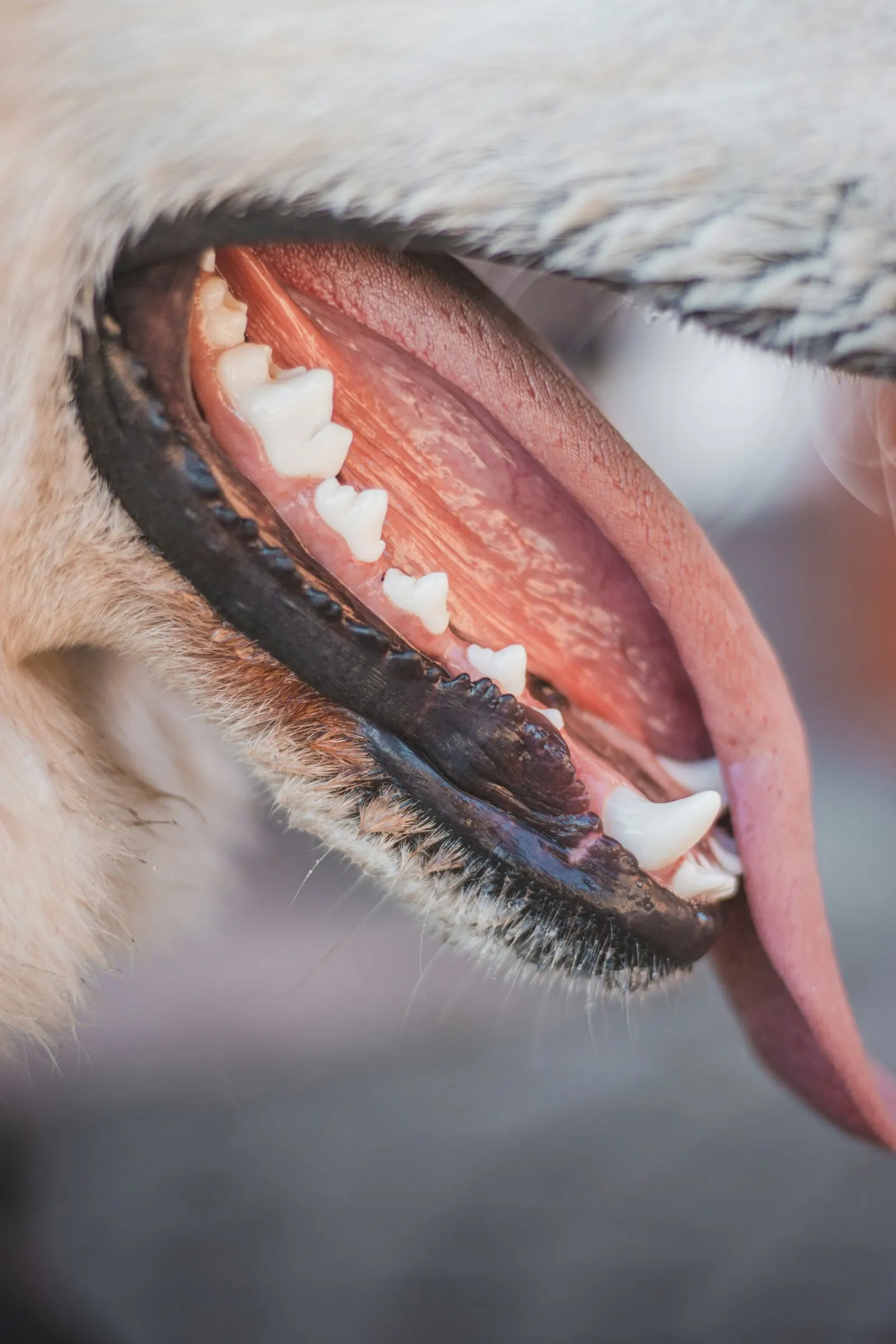
The great majority of cats and dogs over three years old carry some form of tooth or gum trouble. Even so, oral health is the area owners notice last. Bad breath tends to be written off as normal. In truth, the smell is the first messenger of a problem on the move.
Why is tartar a serious problem?
Plaque hardens into tartar within a few days. Tartar pushes at the gum, inflames it, and over time the tissues holding the tooth break down. There is a less visible side as well. Chronic inflammation in the mouth enters the bloodstream and puts a load on the heart, kidneys and liver. Dental cleaning is a matter of systemic health, not appearance.
Dental care at our clinic
We begin with an oral exam, looking at the degree of tartar, the condition of the gums, and any loose or broken teeth. Dental scaling is done with an ultrasonic scaler, under anesthesia. A cleaning attempted without anesthesia stays limited to the visible surface of the tooth and never reaches below the gumline, where the real problem sits. Before anesthesia, every patient gets screening tests.
Teeth that cannot be saved are extracted in the same session. Pain management and healing checks after an extraction are on us.
What can you do at home?
Keeping a freshly cleaned mouth that way is in your hands. Brushing with a pet-specific toothpaste is the most effective method, and at the exam we show you how to build the habit. For patients where brushing simply is not going to happen, we can suggest dental treats and oral care products.